Web development
How much does it cost to build a website in 2026?
How much does it cost to build a website in 2026? Compare landing pages, business sites, ecommerce and custom web apps, with realistic EUR ranges.
A website in 2026 can start at a few hundred euros with an independent developer or small studio for a simple, well-defined project, and run into several thousand — sometimes considerably more — for an advanced ecommerce store, a web application or a business platform. The gap isn't only about page count: it comes mainly from the amount of design work, the features involved, and the level of finish expected.
The figures below are illustrative orders of magnitude, not a market average or an official CAPARD studio price list. They're meant to help you compare levels of complexity — a proper quote is always tied to a specific scope.
Why can two websites cost completely different amounts?
Two requests worded as "a five-page business website" can hide very different projects. In one case, the copy, the photos and the brand identity are ready to go. In the other, the offer still needs clarifying, the content needs organising, the interface needs a genuine design pass, and an old site needs migrating without losing its search rankings.
The price usually comes down to:
- the number of pages, and more importantly, the number of genuinely different page templates;
- whether a new visual identity is being created or an existing one applied;
- copywriting, image sourcing and content integration;
- forms, filters, search and user accounts;
- payment, catalogue management and order handling for an online store;
- connections to a CRM, a booking tool, an API or existing business software;
- the admin tools needed to make certain content editable;
- performance, accessibility, security and technical SEO targets;
- migrating content, URLs and data during a redesign.
Who builds the site also affects the quote, but their status alone doesn't explain the price. An agency, a freelancer and an independent studio can all propose very different scopes and levels of support — what matters is comparing what will actually be designed, built and shipped.
Website cost by project type
As a rough order of magnitude, the ranges below reflect what a project can represent with an independent developer or small studio. They can move a lot depending on the content you already have, the design, the features, the integrations and the timeline. Two projects with the same label can involve very different amounts of work — a proper quote always depends on the actual scope.

Landing page: around €300–700
A landing page is a single page built around one goal: presenting an offer, launching a product, generating quote requests or supporting a campaign. The budget stays modest when the message, the content and the brand identity are already clear.
It goes up if the page needs a heavier editorial pass, animation, several forms, a connection to a sales tool, or variants for different audiences. A single page can end up needing more work than a small site made of very simple templates.
Small business website: around €500–1,000
This level usually covers a handful of pages presenting a business, its services, its approach and a way to get in touch — a good fit for a freelancer, a small business or a local activity whose offer is already well structured.
The project typically includes a design adapted to the brand, a properly finished mobile version, content integration, the essential SEO settings and deployment. The website services page gives a fuller picture of what's involved beyond simply assembling pages.
More customised business website: around €800–1,500
The budget increases when the site has to carry a strong brand image, present several offers, include case studies, run in two languages, or support more specific interactions. A redesign that involves migrating old URLs while preserving search rankings usually falls into this category too.
Projects like this need more back-and-forth on structure, user journeys and visual direction. The pages stop being purely informational — they need to help a visitor understand a sometimes complex offer and act on it without hesitation.
Ecommerce website: projects can start around €900
An ecommerce site is never just a product catalogue on a page. You need to plan the catalogue itself, variants, the cart, payment, transactional emails, shipping rules, tax, customer accounts and order administration. Syncing with stock, a carrier or existing business software can widen the scope quickly.
A project can start around €900 for a reasonably simple, well-defined store — but larger or more complex stores can quickly go beyond €2,500. A shop with twenty simple products and one shipping method carries a very different workload to a catalogue of several hundred references sold in multiple countries. The right platform should follow real usage, not a wish list of features "just in case".
Custom web application or internal tool: approximately €1,000–4,000
A web tool supports a process: a client portal, a configurator, a dashboard, case management, booking, or internal automation. Its cost depends less on the number of screens than on business rules, access permissions, data and connections to existing systems.
A first version built around one essential workflow often makes it possible to validate the need before adding further modules. That's one of the advantages of custom web development: you build around the actual use case, instead of reproducing every feature of an off-the-shelf piece of software.
Complex business platform: often starts around €4,000–5,000
A platform bringing together several user roles, payments, workflows, notifications, exports and external integrations needs to be approached as a software product. Scoping, technical architecture, security, testing and ongoing iteration all take on real weight. This starting point can move considerably depending on the number of modules, business constraints and the level of support expected.
It's usually more sensible to split a project like this into phases: a technical foundation, a first workable version, feedback from real users, then further improvements. That approach lowers the risk and lets decisions be based on real results instead of a specification frozen too early.
What should a website quote actually include?
A useful quote shouldn't just say "design and development". It should make clear what happens before, during and after the build.
Project scoping
Scoping turns a general idea into decisions: goals, audiences, content, pages, features, constraints and priorities. This step avoids discovering halfway through development that a client area, a migration or an external connection was actually essential. The project method page shows how these decisions get organised.
UX/UI design
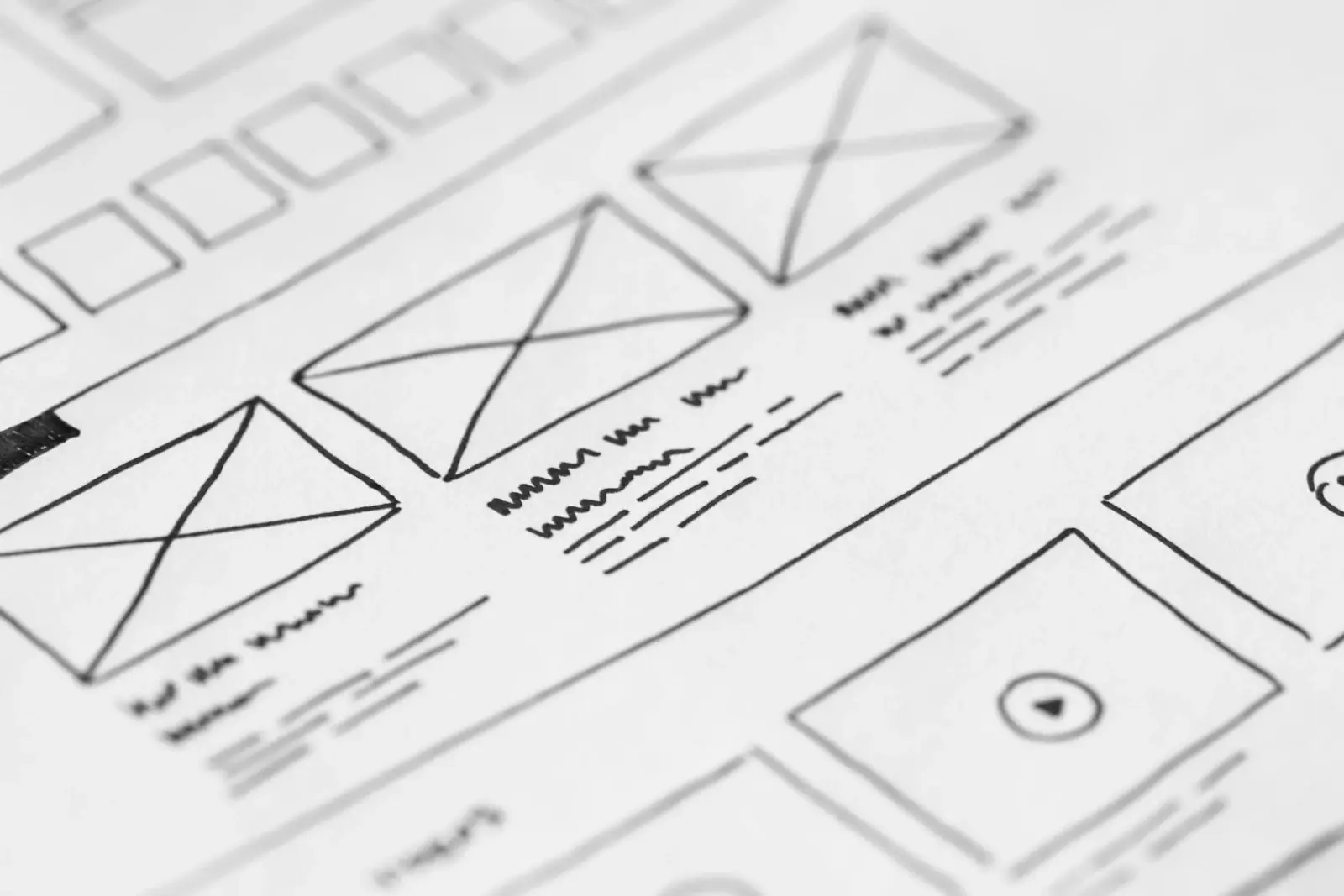
UX organises the journeys and the information. UI then turns those decisions into a coherent visual interface. Depending on the project, that can range from a simple wireframe to a full art direction with several components and states — which is why two sites with the same page count can require very different amounts of work.
Development and responsive implementation
Development covers screen implementation, interactions, forms, data handling and any connections to third-party services. Responsive design isn't just shrinking a desktop layout — navigation, content order, touch target sizes and performance all need to stay coherent across mobile, tablet and desktop.
Technical foundations
A professional project should also include a technical SEO baseline, controlled loading times, appropriate security measures, essential accessibility, testing and deployment configuration. The number of review rounds and revisions included should be stated clearly.
Finally, you should know what belongs to you at handover: source code, design files, content, technical accounts, domain access and useful documentation.
What costs remain after launch?
The initial budget isn't the only cost to plan for, but the recurring expenses for a business website can stay simple.
- The domain name is typically renewed every year; its price depends on the extension and the registrar.
- Hosting varies with traffic, server-side functionality, storage and the level of service required.
- Third-party services may bill for sending emails, taking payments, search, booking, maps or other APIs.
- Future improvements cover new pages, features or adjustments as your business evolves.
- Technical support can include updates, monitoring, backups and interventions when they're needed.
Ask for these items to be listed separately in the quote. A subscription can make sense when it maps to a real service — it shouldn't be used to hide the cost of the initial build or make your accounts hard to recover.
Template, CMS or custom development: how does it affect the price?
A template reduces design time when your needs fit an existing structure. It's a rational choice for a fast launch, a tight budget, or a site where visual identity isn't the priority. The trade-off can be more limited customisation and components you don't actually need.
A CMS makes sense when a team needs to publish regularly, manage a large catalogue, or rely on a proven ecosystem of extensions. Its setup, paid extensions, updates and any specific adjustments should still be part of the comparison.
Custom development becomes worthwhile when your identity, performance targets, user journeys or functionality go beyond what a standard framework offers. It demands more upfront design work, but can produce a far more targeted foundation. The right choice isn't the most technical one — it's the one that answers the actual need without adding unnecessary complexity.
Why is the cheapest quote not always the cheapest project?
A very low price isn't necessarily a bad sign — it can reflect a deliberately narrow scope or content that's already prepared. The risk mainly appears when essential elements are left implicit and end up billed later, postponed, or dropped altogether.
To compare two proposals properly, check:
- the number of pages and templates actually included;
- the features described, along with their limits;
- the level of design customisation;
- how content is prepared and integrated;
- mobile behaviour and which browsers were tested;
- technical SEO and redirects in the case of a redesign;
- deployment, domain and technical account ownership;
- how many review or revision rounds are included;
- external integrations and their subscriptions;
- code ownership and the terms for getting your data back.
A clear quote can be shorter than a very detailed one, but its limits should still be understandable. To gauge the expected level of finish, it's also worth looking at comparable work and asking what was actually built on those projects.
How much should you budget for your project?
Start by identifying the decision the website needs to help your visitor make. If they just need to understand a single offer and get in touch, a landing page may be enough. If several services, proof points and audiences need to coexist, a properly structured business website will serve you better. As soon as the site handles transactions, data or business rules, it needs to be approached like a software product.
Then prepare three lists: what's essential for launch, what would genuinely improve the first version, and what can wait. That hierarchy makes quotes easier to compare and stops you from paying too early for features whose actual use hasn't been proven yet.
The best budget isn't the lowest or the highest one — it's the one that covers a useful, understandable and workable scope, with enough quality that you don't have to start over a few months after launch.
CAPARD studio is an independent web studio based in Rouen, France, working with both local and remote clients on websites, ecommerce projects and custom web tools. To get a meaningful estimate, come prepared with your goal, the content you already have, the features you can't do without, and your timeline — a few concrete details are usually enough to start a useful first conversation.
- website cost
- website development
- web budget
- ecommerce
- custom development